
In Auckland, children’s mouth breathing treatment usually starts with an assessment to work out why a child is breathing through their mouth, then may involve monitoring, habit support, dental or orthodontic guidance, myofunctional therapy, or referral to a GP or ENT if nasal or airway issues are suspected. The right pathway depends on the child’s symptoms, age, growth stage, and whether the main issue appears to be congestion, enlarged tonsils or adenoids, oral posture, bite development, or a combination of factors.
If your child has persistent mouth breathing, snoring, restless sleep, dry mouth, speech changes, or visible bite changes, a professional assessment is the safest next step rather than self-diagnosis. Book a children’s mouth breathing consultation at Caring 4 Smiles in Auckland to understand what may be contributing and what care pathway is appropriate.
Clinician byline: Caring 4 Smiles clinical team, Auckland.
Clinical review: Medically and clinically reviewed for general accuracy; this page is educational and does not replace individual diagnosis or treatment advice.
What mouth breathing in children can mean — and when Auckland parents should act
Mouth breathing means a child is regularly breathing through their mouth instead of their nose. That can happen temporarily during a cold or blocked nose, which is common and not usually a sign of a long-term problem on its own. Parents usually seek help when it becomes a persistent pattern rather than an occasional response to congestion.
Persistent mouth breathing can matter because it may be linked with sleep disruption, dry mouth, oral health concerns, and changes in the way the lips, tongue, teeth, and jaws rest or develop. It does not automatically mean there is a serious airway problem, but it does mean the child may benefit from a structured assessment.
Common signs parents may notice include:
- Open-mouth posture at rest
- Snoring or noisy breathing during sleep
- Restless sleep or frequent waking
- Dry mouth on waking
- Bad breath related to oral dryness
- Speech differences or unclear sounds in some children
- Lip incompetence, where the lips do not rest together easily
- Dental crowding or bite changes as the child grows
- Daytime tiredness, irritability, or difficulty concentrating
These signs can have more than one explanation, and not every child with one of these features needs active treatment. That is why persistent symptoms are best assessed by a clinician rather than interpreted in isolation at home.
If you want background reading before booking, see Caring 4 Smiles and, as this cluster publishes, our guides to What Is Mouth Breathing in Children and the Signs of Mouth Breathing in Children checklist.
What are the signs that a child may need treatment for mouth breathing?
A child may need assessment for treatment if mouth breathing is persistent, especially when it comes with snoring, poor sleep, dry mouth, gum irritation, speech concerns, daytime tiredness, or visible bite and jaw changes. The goal is not to assume the cause, but to identify whether the child needs simple monitoring, support for habits and oral posture, or referral for medical or airway-related review.
What causes children’s mouth breathing?
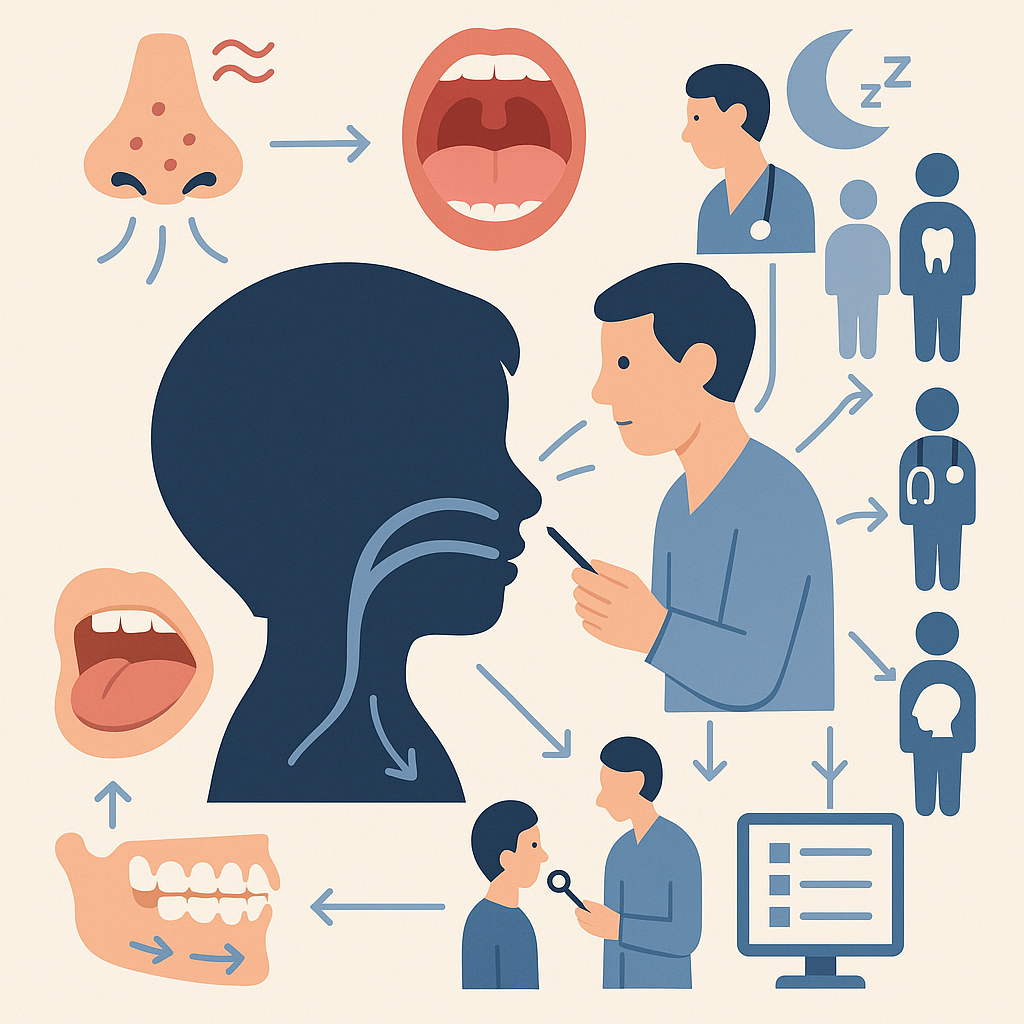
There is no single cause of mouth breathing in children. In practice, clinicians often find that more than one factor is involved. A child may have nasal congestion and enlarged adenoids, for example, or a history of oral habits alongside developing bite changes.
Common possibilities discussed during assessment include:
- Nasal blockage or allergies: Ongoing congestion can make nose breathing difficult.
- Enlarged tonsils or adenoids: These can contribute to snoring, noisy sleep, and mouth-open posture.
- Oral habits: Thumb sucking, prolonged dummy use, or other habits may affect oral posture and development.
- Tongue posture or oral muscle pattern concerns: Some children have difficulty maintaining lips-together, tongue-up resting posture.
- Jaw development concerns: Narrow arches, crowding, or growth patterns may be part of the picture.
- Bite or airway-related factors: These may be observed during dental assessment and may prompt further review.
This is where a careful, local care pathway matters. A dentist can observe oral and developmental patterns, but if the history suggests nasal obstruction, sleep-disordered breathing, or enlarged tonsils and adenoids, a GP or ENT may need to assess the medical side. If oral posture and muscle function are relevant, myofunctional therapy may also be part of the plan.
For a deeper explanation of possible contributors, parents can read our related guide to Causes of Mouth Breathing in Children. Families with younger children may also find Mouth Breathing in Babies and Toddlers useful.
| Possible cause or contributing factor | Who may assess it | Possible treatment approach | What parents can expect next |
|---|---|---|---|
| Nasal congestion or suspected allergies | GP, sometimes ENT; dentist may note symptoms and refer | Medical review, allergy management, monitoring of breathing pattern | Referral or follow-up after medical treatment to see whether mouth breathing improves |
| Enlarged tonsils or adenoids | GP or ENT | Medical assessment and management based on symptoms and findings | Further airway or sleep-related review if indicated |
| Oral habits affecting posture or bite | Dentist, sometimes myofunctional therapist | Habit support, monitoring, oral posture guidance | Review visits to track whether the habit is reducing and development is stabilising |
| Tongue posture or oral muscle pattern concerns | Dentist, myofunctional therapist | Myofunctional therapy where clinically appropriate | Home exercises, regular reviews, and coordination with other providers if needed |
| Crowding, narrow arches, or jaw development concerns | Dentist, orthodontic provider | Growth and bite review, orthodontic guidance, appliances in selected cases | Records may be taken and a staged treatment plan discussed |
| Mixed factors | Dentist coordinating with GP, ENT, orthodontic provider, or therapist | Combined care pathway rather than a single fix | Referrals, follow-up timing, and progress checks across providers |
How children’s mouth breathing is evaluated in Auckland
For Auckland families, the treatment pathway usually begins with a first assessment focused on history, symptoms, oral findings, and whether referral is needed. At Caring 4 Smiles, the aim is to understand the whole picture rather than jump straight to one treatment.
A dental or oral assessment may include:
- Medical and dental history
- Questions about sleep, snoring, congestion, and daytime symptoms
- Review of feeding, dummy use, thumb sucking, or other habits where relevant
- Examination of the teeth, gums, bite, and jaw development
- Observation of lip posture, tongue posture, and oral resting pattern
- Airway-related observations that may suggest the need for GP or ENT input
- Discussion of whether monitoring, referral, or active support is the best next step
This kind of appointment is not the same as diagnosing every possible medical cause in the dental chair. Instead, it helps clarify what the dental team can assess directly, what may need another clinician’s opinion, and whether coordinated care is likely to help.
Which healthcare professionals may be involved in a child’s mouth breathing treatment in Auckland?
Depending on the findings, a child’s care may involve several providers:
- Dentist: Assesses oral health, bite, jaw development, oral habits, and visible mouth-breathing patterns; may coordinate referrals.
- GP: Reviews general health, congestion, allergies, and whether specialist referral is needed.
- ENT specialist: Assesses issues such as enlarged tonsils, adenoids, or nasal obstruction when indicated.
- Orthodontic provider: Reviews crowding, arch development, and whether orthodontic guidance or appliances may be appropriate.
- Myofunctional therapist: Supports oral posture, muscle function, and breathing-related exercises where clinically suitable.
That multidisciplinary approach is common because children’s mouth breathing can sit across dental, developmental, and medical boundaries. One provider may identify the issue first, but the best plan is often shared.
If you would like to understand what a first visit may involve, see our upcoming guide to Mouth Breathing Assessment for a Child in Auckland (first visit). You can also learn more about our team and the broader services available through Caring 4 Smiles.
General guidance from the American Academy of Pediatric Dentistry notes that dentists can play an important role in recognising signs of sleep-disordered breathing and referring appropriately when concerns are identified. The Healthify New Zealand platform also advises medical review for persistent snoring or breathing concerns in children. These sources support a referral-based, multidisciplinary pathway rather than a one-size-fits-all approach.
Treatment options Auckland families may be offered
Children’s mouth breathing treatment in Auckland is not one single therapy. The right option depends on the cause, the child’s age, growth stage, symptom severity, and whether the main issue appears medical, functional, dental, developmental, or mixed.
Monitoring and review
Some children do not need immediate active treatment. If symptoms are mild, recent, or linked to a temporary issue, the clinician may recommend monitoring with follow-up to see whether the pattern resolves or persists.
Habit support and oral posture guidance
If oral habits or resting posture seem relevant, families may be given practical support to reduce habits and encourage healthier oral patterns. This is usually gradual and works best with consistent follow-up.
GP or ENT management for nasal or airway-related concerns
If the history suggests ongoing congestion, allergy-related symptoms, enlarged tonsils, enlarged adenoids, or sleep-related breathing concerns, the child may be referred to a GP or ENT. Medical treatment sits outside dental care, but it can be central to improving mouth breathing when nasal airflow is limited.
Dental and orthodontic guidance
If the child has crowding, a narrow arch, bite changes, or jaw development concerns, the dental team may recommend review over time or referral for orthodontic guidance. The purpose is to assess growth and function carefully, not to promise that every bite issue is caused by mouth breathing or that every child needs appliances.
Myofunctional therapy
Myofunctional therapy may be considered when oral muscle function, tongue posture, lip seal, and breathing pattern are relevant to the child’s presentation. It is typically used as part of a broader plan rather than as a stand-alone answer for every child. Parents can read more in our guide to Myofunctional therapy for children.
Appliances such as Myobrace or other oral appliances
In selected cases, a clinician may discuss appliances such as Myobrace or other oral appliances if they are clinically appropriate for the child’s age, dentition, and treatment goals. These are not suitable for every child who mouth breathes, and they should be recommended only after proper assessment. If appliances are being considered, ask what the goals are, how success will be measured, and whether other providers are also involved. Our related resource on palate expanders and oral appliances explains this in more detail.
What treatments are available for children’s mouth breathing?
Treatment may include monitoring, support for habits and oral posture, GP or ENT management for nasal or airway-related issues, dental or orthodontic guidance for bite and jaw development, myofunctional therapy, and in selected cases oral appliances such as Myobrace. The treatment plan should match the child’s cause or contributing factors rather than applying the same approach to every case.
Families should also expect that treatment takes time. Follow-up matters because children grow, symptoms can change, and progress may depend on how well different parts of the plan work together.
What to expect at appointments, costs, and choosing the right provider
For parents searching for the complete guide to children’s mouth breathing treatment Auckland, one of the most useful things to know is what a consultation is actually for. A good first appointment should help you understand the likely contributors, whether referrals are needed, and what the next step is — not pressure you into a treatment decision before the assessment is complete.
At or after an appointment, parents may want to ask:
- What do you think may be contributing to my child’s mouth breathing?
- Are there signs that suggest GP or ENT review is needed?
- Who will lead care if more than one provider is involved?
- Will any records, photos, scans, or impressions be needed?
- Is the recommendation to monitor, refer, or start active treatment?
- How will progress be reviewed over time?
- If an appliance is suggested, what is the clinical reason for it?
- What happens if symptoms do not improve?
Because exact pricing depends on the assessment findings and whether treatment is simple or multidisciplinary, families should request a personalised treatment plan and fee estimate. That is usually more useful than comparing generic online prices, especially when one child may only need monitoring while another may need coordinated care across dental and medical providers.
When choosing a provider in Auckland, look for clear explanations, careful assessment, and willingness to coordinate referrals where needed. A family-friendly clinic should help parents understand what is known, what is still uncertain, and what the practical next step is.
If you are comparing providers, it can help to review the clinic’s approach, team, and booking process. You can visit the Caring 4 Smiles homepage, learn more about our team, or use the contact and booking page to ask about children’s mouth breathing consultations in Auckland.
When to book an assessment for your child
Auckland parents should consider booking an assessment when mouth breathing is persistent rather than occasional, especially if it is accompanied by snoring, restless sleep, daytime tiredness, dry mouth, gum irritation, speech concerns, or visible changes in the bite or jaw. Early review does not always mean active treatment is needed, but it can clarify whether the child needs monitoring, referral, or a more structured plan.
When should Auckland parents book an assessment for a child who breathes through their mouth?
Book an assessment if your child regularly breathes through their mouth when awake or asleep, snores often, sleeps poorly, wakes with a dry mouth, seems unusually tired during the day, has ongoing congestion, or shows bite and jaw changes. It is also sensible to seek review if you are unsure whether the pattern is temporary or persistent.
Trusted health sources support acting on persistent symptoms. Healthify New Zealand advises medical review for children with regular snoring or breathing concerns during sleep, and the American Academy of Pediatric Dentistry recommends that dental professionals identify possible sleep-related breathing issues and refer when appropriate. For Auckland families, that means early assessment can be a practical way to sort out whether the next step is reassurance, referral, or treatment.
If you are ready to move from online research to a clear local care pathway, book a children’s mouth breathing consultation at Caring 4 Smiles in Auckland. We can help assess what may be contributing, explain whether other providers should be involved, and outline the next step that fits your child’s needs.
FAQ
What are the signs that a child may need treatment for mouth breathing?
Signs that may justify assessment include persistent open-mouth posture, snoring, restless sleep, dry mouth, bad breath linked to oral dryness, speech concerns, daytime tiredness, gum irritation, and visible bite or jaw changes. A clinician can help determine whether these signs point to a temporary issue, a habit pattern, or a need for medical or dental follow-up.
Which healthcare professionals may be involved in a child’s mouth breathing treatment in Auckland?
Care may involve a dentist, GP, ENT specialist, orthodontic provider, and myofunctional therapist, depending on the child’s symptoms and findings. The dentist may identify oral and developmental patterns first, while the GP or ENT may assess nasal blockage, allergies, tonsils, adenoids, or other medical contributors.
What treatments are available for children’s mouth breathing?
Treatment options can include monitoring, support for oral habits, medical management through a GP or ENT, dental or orthodontic guidance, myofunctional therapy, and in selected cases oral appliances such as Myobrace. The best option depends on the child’s cause, age, growth stage, and symptom severity.
When should Auckland parents book an assessment for a child who breathes through their mouth?
Parents should book an assessment when mouth breathing is persistent, especially if the child also snores, sleeps poorly, seems tired in the day, wakes with a dry mouth, has ongoing congestion, or shows speech, bite, or jaw changes. Early assessment helps clarify whether monitoring, referral, or active treatment is appropriate.
Sources: American Academy of Pediatric Dentistry policy and guidance on sleep-related breathing disorders in children; Healthify New Zealand guidance on snoring and sleep-related breathing concerns in children; general clinical reference standards on multidisciplinary assessment of paediatric breathing, oral posture, and dentofacial development.