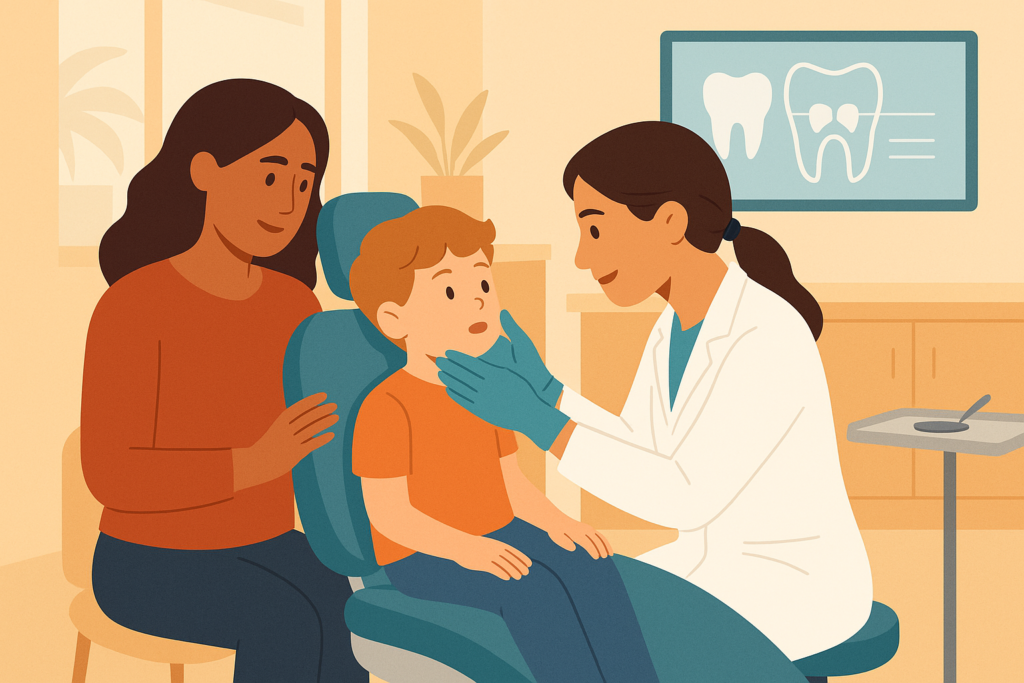
A mouth breathing assessment child Auckland visit usually includes a review of your child’s symptoms and habits, a dental and bite examination, observations of breathing and oral posture, and a clear plan for what should happen next. At Caring 4 Smiles in Auckland, the first appointment is typically assessment-focused, which means it is designed to understand the full picture before deciding whether monitoring, treatment planning, or referral is the right next step.
For many families, that is reassuring: you do not need to arrive knowing the answer already. The purpose of the first visit is to help a clinician gather the right information, explain what they can assess in the mouth and jaw area, and clarify whether your child may benefit from dental support, habit-focused care, or input from another provider.
What a mouth breathing assessment for a child in Auckland is for
A child mouth breathing consultation is usually booked when parents want a clearer understanding of whether a breathing habit, oral posture pattern, or developmental concern may be affecting their child’s teeth, jaws, or overall oral function. In Auckland, Caring 4 Smiles is a practical first point of contact for families who want a gentle, local assessment and a straightforward explanation of what the dentist can observe.
The first visit is not usually about rushing into immediate treatment. It is about assessing symptoms, habits, airway-related concerns that may be visible from a dental perspective, oral development, and whether the findings suggest simple monitoring, preventive guidance, a structured treatment plan, or referral to another health professional.
This distinction matters. A dentist can assess many visible and functional signs in the mouth, bite, and facial development, but not every cause of mouth breathing can be confirmed in a dental chair. Some children need only observation and habit guidance. Others may need a broader interdisciplinary pathway involving a GP, ENT specialist, orthodontist, or another provider.
What does a mouth breathing assessment for a child in Auckland usually include?
In plain terms, the first appointment usually includes:
- a discussion of your concerns and your child’s symptoms
- a review of health history, habits, and any previous advice from other providers
- an examination of teeth, bite, jaw development, lips, tongue posture, and oral tissues
- observations of breathing pattern and open-mouth posture
- photos, scans, or impressions if clinically appropriate
- an explanation of whether the next step is monitoring, treatment planning, or referral
That process helps parents leave with more clarity, even if treatment does not begin on the same day.
| Part of first visit | What the dentist checks | What may happen next |
|---|---|---|
| Parent discussion and history | Symptoms, habits, sleep concerns, medical background, previous advice | Clinician identifies key concerns and decides what to assess more closely |
| Oral and bite examination | Teeth, crowding, bite alignment, jaw development, palate shape, oral tissues | Monitoring, preventive advice, or treatment planning may be discussed |
| Breathing and posture observations | Lip seal, tongue position, open-mouth posture, visible functional patterns | Habit-focused care or further evaluation may be recommended |
| Records if needed | Photos, scans, or impressions where clinically appropriate | Used to compare changes over time or support a personalised plan |
| Recommendation stage | Whether findings appear mainly dental, developmental, or broader | Review appointment, treatment pathway, or referral to another provider |
When parents usually book an assessment
Parents usually book when they have noticed a pattern that does not seem quite right, or when another health professional has suggested a dental review. Mouth breathing itself can have different causes, and some signs overlap with other conditions, which is why an in-person assessment is useful.
How do I know if my child should have a mouth breathing consultation?
Families often seek an assessment when they notice one or more of the following:
- frequent open-mouth posture during the day
- snoring or noisy breathing during sleep
- restless sleep or waking with a dry mouth
- crowded or misaligned teeth
- concerns about chewing, swallowing, or speech patterns
- prolonged thumb sucking or other oral habits
- difficulty keeping lips comfortably together at rest
- concerns raised by a dentist, GP, speech professional, or another clinician
These signs do not automatically mean a child has a specific airway or sleep disorder, and they do not confirm that mouth breathing is the only issue. However, they are reasonable reasons to book a consultation, especially if the pattern is ongoing or you are concerned about how your child’s teeth and jaws are developing.
Recognised organisations such as the American Academy of Pediatric Dentistry note that oral habits, growth patterns, and functional concerns can be relevant to developing dentition and occlusion, while broader breathing or sleep concerns may require multidisciplinary assessment. That is why a careful first visit matters: it helps separate what can be observed dentally from what may need medical input.
What usually happens at the first appointment
The first appointment is usually calm, conversational, and information-gathering. For many children, especially younger ones, the goal is to make the visit comfortable while still collecting enough detail to guide the next step.
What happens at a child mouth breathing consultation in Auckland?
Auckland parents can usually expect the appointment to move through several simple stages.
1. Health, habit, and symptom history
The dentist or clinician will usually begin by asking what you have noticed at home. This may include when your child tends to breathe through the mouth, whether they snore, whether sleep seems unsettled, and whether there are concerns around chewing, speech, dry mouth, or daytime fatigue. You may also be asked about allergies, nasal congestion, past medical history, and any previous assessments.
Habit history also matters. Thumb sucking, dummy use, tongue habits, and oral posture patterns can all be relevant when looking at how the teeth and jaws are developing.
2. Parent concerns and goals
Parents often arrive with a specific concern, such as “my child always sleeps with their mouth open” or “another provider mentioned crowding and mouth posture.” The first visit gives you time to explain those concerns clearly. This helps the clinician understand what prompted the booking and what outcome would feel most helpful for your family.
3. Discussion of sleep and breathing patterns
The dentist may ask about snoring, restless sleep, dry mouth on waking, frequent waking, or whether your child often seems congested. This does not mean the dental team is diagnosing a sleep or ENT condition. It means they are gathering context, because breathing and sleep patterns can be relevant when deciding whether a child may need dental monitoring alone or a broader referral pathway.
Guidance from bodies such as the American Dental Association supports the idea that dentists can play a screening and referral role when sleep-related breathing concerns are suspected, while diagnosis and medical management sit with the appropriate medical professionals.
4. Examination of teeth, bite, and jaw development
The clinical exam usually includes checking how the upper and lower teeth meet, whether there is crowding, how the jaws appear to be developing, and whether the palate shape or bite pattern raises any concerns. The dentist may also look for signs of wear, gum irritation, or dry oral tissues if these are relevant.
If your child may benefit from habit and development-focused support, the clinician may discuss options such as Myobrace. For broader context on available care, parents can also review Caring 4 Smiles dental services.
5. Observation of oral posture and function
The clinician may observe whether your child can rest with lips together, where the tongue appears to sit, and whether there are visible patterns that suggest oral posture or functional habits may be contributing to development concerns. These observations are part of the assessment; they help build a picture rather than provide a stand-alone diagnosis.
6. Photos, scans, or impressions if clinically appropriate
Depending on your child’s age, cooperation, and the findings on the day, the dentist may recommend photographs, digital scans, or impressions. These records can help document the current position of the teeth and jaws and make it easier to compare changes over time.
7. Personalised explanation and plan
At the end of the visit, parents should receive a clear explanation of what was observed, what remains uncertain, and what the next step is. That may mean watchful monitoring, preventive advice, a treatment discussion, or referral to another provider for further assessment.
What the dentist may look for during the assessment
A dentist assessing a child for possible mouth breathing is looking for observable oral and developmental signs, not trying to replace a medical airway or sleep assessment. The value of the appointment is that it can identify patterns that matter and help families move forward with the right level of care.
What will a dentist look for during a mouth breathing assessment for a child?
The assessment may include attention to the following areas:
- Facial growth patterns: whether facial development appears balanced or whether there are visible features that suggest closer review is needed
- Bite alignment: overbite, crossbite, open bite, or other occlusal patterns that may be relevant to oral development
- Palate shape: whether the upper arch or palate appears narrow or otherwise notable
- Crowding and spacing: whether there is enough room for teeth to erupt and align well
- Tooth wear: signs of grinding or wear if present
- Gum and oral tissue health: whether the tissues appear dry, irritated, or inflamed, where relevant; Caring 4 Smiles also provides gum and periodontal care when oral tissue health needs attention
- Oral habits: thumb sucking, prolonged dummy use, tongue habits, or other patterns that may influence development
- Tongue position and mobility: including whether tongue posture seems low or whether there are concerns that may warrant further review
- Lip seal: whether the child can rest comfortably with lips together
- Visible signs suggesting broader evaluation: findings that indicate the child may benefit from GP, ENT, orthodontic, or allied-provider input
In some cases, parents also ask about tongue tie. If relevant, the dentist may comment on whether tongue mobility appears restricted or whether further assessment would be appropriate. As with other aspects of the visit, this is part of a broader clinical picture rather than a one-factor conclusion.
Caring 4 Smiles families can learn more about the clinicians involved through the team page, including Dr Kelvin Tay and Dr Madison Chang. That can be helpful if you want to feel confident about who will be guiding your child’s assessment and next steps.
Should I book a dentist first for my child’s mouth breathing in Auckland, or do I need a referral?
In many cases, parents can book a dentist first without a referral, especially when they are concerned about oral posture, crowding, bite development, or visible mouth breathing habits. A dental assessment can help determine whether the concern appears mainly dental and developmental, or whether medical or specialist review should happen alongside it.
If your child already has a GP, ENT, paediatric, orthodontic, or speech-related provider involved, that does not prevent a dental assessment. It often makes the consultation more useful, because the dentist can consider existing information and coordinate recommendations more clearly.
Possible next steps, treatment options, and referrals
After the first consultation, the next step depends on your child’s age, findings, symptoms, and overall health picture. A balanced assessment should not overpromise one solution for every child. Instead, it should explain what is known, what still needs clarification, and what sequence of care makes sense.
Will my child receive treatment at the first appointment or just an assessment?
Most first visits are primarily assessments. Some children may receive immediate preventive advice or simple habit guidance on the day, but more structured treatment usually follows only after the clinician has reviewed the findings and explained the options properly.
Possible outcomes include:
- Monitoring: if the findings are mild, age-related, or not yet ready for active treatment, the dentist may recommend review appointments to track growth and habits over time
- Preventive advice: parents may be given guidance on oral hygiene, dry mouth management, oral habits, or what to observe at home
- Habit-focused or developmental care: where appropriate, the dentist may discuss pathways such as Myobrace or other approaches aimed at oral habits and development
- Follow-up records and planning: a second appointment may be used to review scans, photos, impressions, or treatment timing in more detail
- Referral: if the findings suggest the need for broader evaluation, the dentist may recommend seeing a GP, ENT specialist, orthodontist, or another allied provider
Parents should expect a clear explanation of why a recommendation is being made, whether it is urgent or routine, and what timing is sensible. That is especially important when the plan involves multiple providers.
Can a dentist refer my child to another provider after a mouth breathing assessment?
Yes. In fact, referral is an important part of responsible care when the concern goes beyond what can be assessed or managed dentally. A dentist may refer a child for medical, ENT, orthodontic, sleep, or allied-health input if the symptoms or findings suggest that broader evaluation would be helpful.
For example, a child with oral development concerns and persistent snoring may need both dental monitoring and medical review. A child with crowding and bite changes may also benefit from orthodontic input at the right stage of growth. The key point is that referral does not mean the dental visit was inconclusive; it often means the assessment did its job by identifying the right pathway.
High-trust guidance from paediatric and dental organisations consistently supports multidisciplinary care where breathing, sleep, growth, and oral development overlap. That is why the best first consultations are careful, measured, and specific about scope.
How to prepare for the visit and when to book
If you are considering a child mouth breathing assessment in Auckland, a little preparation can make the appointment more useful. You do not need to bring perfect records, but a few practical details can help the clinician understand the pattern more quickly.
What should I bring to my child’s first consultation?
- your child’s medical history and any current medications
- notes about symptoms you have noticed, such as snoring, open-mouth posture, dry mouth, or restless sleep
- details of any previous advice from a GP, ENT, speech professional, orthodontist, or another dentist
- previous dental records or X-rays if you have them available
- a list of questions you want answered during the visit
It can also help to note when symptoms tend to happen most often: during sleep, during screen time, when your child is congested, or all the time. That kind of detail can make the history more meaningful.
Most importantly, parents should know that the first visit is usually gentle and assessment-focused. It is designed to listen first, examine carefully, and explain the next step clearly. If you have been unsure whether to wait or act, booking an assessment is often the most practical way to get clarity.
To arrange a Booking confirmed appointment with Caring 4 Smiles, use the contact page. You can also visit the homepage for clinic information, location details, and broader service context for Auckland families ready to take the next step.